To Raymond ‘Ray’ Inskeep (1926-2003)1, unforgettable Oxford Tutor, for the beauty of learning
No prophecy prepared me for that sight: a Gothic skyline of domes, cupolas, and spires drifting like a dream. Under a mother-of-pearl twilight, a fragile shard of light clung to the sleepy medieval arcades. Below them, the Isis flowed with the seductive grace of a lover. This was Oxford: a ‘tomb-city’ offering the first-time seeker a fragment of timeless history and a future yet-to-be-born.
'Why archaeology?' Ray Inskeep’s voice cut through the stillness of our first meeting. 'Why not a different science’?'
Caught in the suddenness of his gaze, I didn't speak of tools or techniques. I spoke of a hunger—a ghost-sense for ancient peoples and the desolate landscapes they left behind. I told him of my urge to breathe life into faded fragments, much like the feeling I recently had while leafing through the engravings in a book on 16th-century Lisbon. There, amidst the "global city," I was struck by a throng of African faces. How do we trace these fleeting lives? Who were they, and why were they there? How many of their personal stories remain buried forever?
If the hidden could speak—if those paintings, once salvaged by Rossetti in 1866, had vanished without a trace—who would give them a voice? If the images from of a lost empire could whisper their origins and those Africans tell us of their longing for home, the past would cease to be a mere ghost. My quest goes beyond those images: it is about trying to rescue what survives from the silence of the grave, whether lying in a musty museum cabinet or deep beneath the earth.
"It’s the scientific kaleidoscope that fascinates me," I said, my ideas finally finding their form, “A craft that weaves prehistory and anthropology into the hard truths of the sciences of biology, physics and the earth sciences”. I was reminded of Ray's time as a professor in South Africa recalling his words ”...And as you once wrote in an article in 1970, “the past as the common denominator for all humanity, regardless of race, creed, or colour."
Archaeology bridges the gap to our deepest past, illuminating human history where written records fall silent. It reveals a fundamental truth: humanity’s pulse first beat in Africa, echoing across the globe not once, but three times.2 For too long, Mozambique’s chapter in this story was suppressed by colonial silence— a neglect that was, perhaps, less harmful than the active fabrications of neighboring Rhodesia where myths were invented to explain the Great Zimbabwe monument. Rhodesia and South Africa both twisted history into myth to justify tyranny and dim the light of reason. Science must never bow to the ideologies that have, for centuries, authored our darkest tragedies.
I fondly recall childhood days in the mangrove mud, mesmerized by mudskippers leaping, climbing, and blinking with goggled eyes. Those tidal trails were a playground of discovery, where I found prehistoric microliths—even making local news—and explored rock painting sites with my history teacher, Celina Costa."
Noticing my introspective silence, Ray resumed our conversation with another foundational question: "When did Mozambique truly wake into history?"
This is the second of his six queries—a "six-day creation" of the mind. He isn’t looking for a dry timeline; he is calling for analysis and synthesis, the part and the whole. Ray challenges me to see the invisible threads connecting us rather than the isolated relics we leave behind. Speaking in a quiet, crystalline tone, he reminds me that doubt is the seed of knowledge and that truth is found through methods that breathe and resonate together.
As I struggle to draw the real line between the "pre-historic" and the "historical," Ray senses my hesitation and offers a gentle guidepost for my confusion: "Follow what calls to you most," he says. "for research is fed by the challenge of the unknown—the spark that turns intuition into discovery."
And continuing... “Building on that, Schopenhauer reminded us that the foundation of all knowledge is ultimately the inexplicable; every explanation, no matter how deep an explanation goes, it eventuall reaches this bedrock. Had Kant lived to see this evolution, he might have expanded his definition of philosophy—as a science of concepts—to include an “archaeology” that uncovers the hidden truths and the universal Will".
In the ensuing silence, I dwell on all unknowns seeking a way into the earth’s core, peeling back the successive veils of time that formed us. Each stage concealing another, more distant and shrouded stratigraphy—enigmas of the past speaking in a forgotten tongue.
The questions and reflections that Ray sets before me are the Rosetta Stone of an ancient dialect—the keys to a translation I yearn to uncover. In our weekly meetings, his role as mentor creates a space for the relearning of thought, reviving the age-old Socratic dialogue known in Oxford as the ‘tutorial system.’ As he tallies the day's final questions, he sets the task ahead: ‘Having pored over the literature on the early farming communities in Mozambique and weighed the hurdles ahead, can you map out the possible answers and the reasoning behind them?’
With six days left, I must prepare my weekly essay for his sharp review and the imminent debate—the first of many to come.
Photos:
-Top: Ray and Adi Inskeep at Oxford 1980 (photo J.Morais)
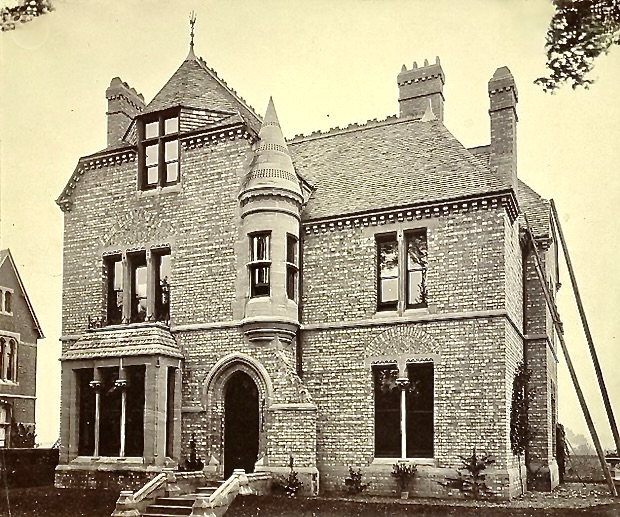
-Bottom: 60 Banbury Road, Oxford (in 1864): Home to ‘my’ Wolfson College (1966–1974) and the Donald Baden-Powell Quaternary Research Centre (1975–2003). Professor Ray Inskeep’s office was the room to the left of the main entrance.
1 Obituary available at https://www.news.uct.ac.za/publications/mondaymonthly/archive/-edition/2003-12-01-edition-37/-article/2003-12-01-tribute-to-inskeep
2 Homo erectus, Homo rhodesiensis and Homo sapiens migrated out of Africa in three distinct, widely separate, and major events (c. 2 million, 500 000 and 200 000 years ago)